
Sports Broadcast Management Guide · Chapter 10 of 14 · videoteamhungary.com
Every time a federation streams its events through a third-party channel without a strategy for capturing the audience, it is making a gift. The platform receives a subscriber. The federation receives a view count. These are not equivalent. A subscriber is a direct relationship — someone who has said they want more. A view count is a number that belongs to someone else’s analytics dashboard.
Audience ownership is not a digital marketing concept grafted onto broadcast strategy. It is the long-term commercial foundation of a sport’s media value. Federations that build owned audiences create leverage. Those that distribute broadcast without capturing audiences create dependency on platforms they do not control.
What audience ownership means in broadcast
Owning an audience means having a direct, persistent relationship with people who watch your content — a relationship that survives platform changes, algorithm updates, and the commercial decisions of third parties. In broadcast terms, this means the viewer’s contact with your sport goes through a channel you control, or at minimum through a channel that gives you the data and the relationship rather than keeping it for itself.
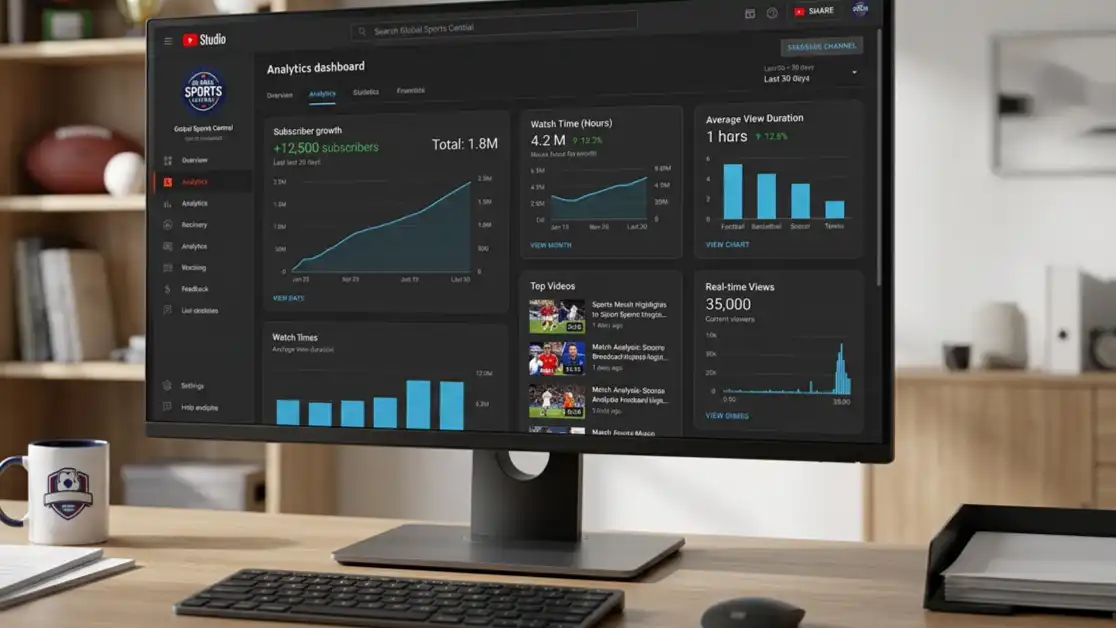
The clearest test of audience ownership is simple: if YouTube shut down tomorrow, would you still be able to reach the people who watch your broadcasts? Federations with owned audiences — email lists, registered users on federation platforms, push notification subscribers — can answer yes. Federations whose entire broadcast audience exists as YouTube subscribers or Facebook followers cannot.
The mechanics of audience loss in third-party streaming
When the production company streams to its own channel
The most direct form of audience loss occurs when a federation allows the broadcast production company to stream the event to the production company’s own YouTube or social media channel. The production company gains subscribers who associated the content with the production company’s brand, not the federation’s. The federation pays for the production and receives no audience relationship in return.
This arrangement is common because it is convenient — the production company already has a channel, already knows how to manage a live stream, and the federation does not need to create an account or manage a broadcast event. The convenience cost is the audience relationship, which has compounding value over time. Every viewer who subscribes to the production company’s channel is a viewer who is not subscribing to the federation’s channel.
When the broadcast goes to a platform without data return
Free streaming platforms — YouTube, Facebook, Twitch — provide view counts and some aggregate analytics. They do not provide viewer identity, contact information, or the ability to re-engage viewers outside the platform. When a federation builds its broadcast audience on these platforms, it builds on infrastructure it does not own, governed by terms it does not set, with data it cannot export.
Platform algorithm changes have repeatedly reduced the organic reach of sports content. A federation with 100,000 YouTube subscribers reaches a fraction of them with each video — the fraction the algorithm decides to show. A federation with 100,000 email subscribers reaches all of them when it sends a message. The email list is an owned asset. The YouTube subscriber count is a metric on a platform that can change its terms at any time.
Strategies for building owned broadcast audiences
Stream to the federation’s own channel
The minimum requirement for audience ownership is that the broadcast appears on a channel the federation controls. If the federation uses YouTube — which is a reasonable choice for reach — the federation’s channel should be the primary destination, not the production company’s. This requires two technical configurations: either the production company streams directly to the federation’s channel using the federation’s stream key, or the production company delivers the signal to a multi-destination encoder that includes the federation’s channel as a destination. Neither is technically complex. Both require specifying the arrangement in the broadcast mandate before the production begins.
Registration gates and pre-broadcast sign-up
For federations using a dedicated streaming platform or OTT service, requiring viewer registration before accessing a free broadcast is one of the most effective audience capture mechanisms available. The viewer receives free access to content they want. The federation receives a registered contact who has demonstrated interest in the sport. The registration data — email address, demographic information if collected — becomes an owned asset that can be used for future broadcast promotion, membership recruitment, and sponsorship reporting.
Registration gates reduce immediate viewing numbers compared to fully open streams. This trade-off is typically worth making for federations building long-term audience relationships, but the decision should be made deliberately as part of a platform strategy rather than avoided because the friction might reduce a view count metric.
Broadcast as a subscriber acquisition tool
Live broadcast is among the most effective mechanisms for converting casual sports interest into committed audience membership. A viewer who watches a live event is demonstrably engaged — they have scheduled time to watch, they have followed the sport to its broadcast channel, and they are experiencing the sport at its highest emotional intensity. This is the optimal moment to present a subscription, membership, or newsletter sign-up offer.
Federations that treat broadcast as purely a distribution exercise miss this conversion opportunity. The broadcast moment — and the period immediately after — is when the audience is most receptive to deepening their relationship with the sport. The broadcast strategy should include a defined mechanism for capturing this conversion: a lower-third graphic during the broadcast, a post-event email to registered viewers, a notification push to app subscribers.
Audience ownership and broadcast rights value
Federations with owned, measurable audiences command higher broadcast rights fees than those without them. A television rights holder or streaming platform acquiring rights to a sport wants evidence that an audience exists and can be reached. A federation that can demonstrate a registered audience of 50,000 engaged viewers across its owned channels is a more attractive rights partner than one that can only point to a YouTube subscriber count it does not control.
Audience ownership data — registered users, engagement rates, geographic distribution — becomes part of the rights package a federation brings to commercial negotiations. This is not a benefit that accrues immediately. It is the result of consistent broadcast audience capture over multiple events and seasons. The investment in audience ownership infrastructure pays off in the rights negotiation that happens three or five years from now, not the one happening next month.
Frequently asked questions
Why should a sports federation care who subscribes to its YouTube channel?
Because subscribers are a direct audience relationship — people who have asked to be notified of new content. A federation’s YouTube subscribers are an owned asset in a way that view counts are not. When the federation publishes a new broadcast, subscribers are notified. When the federation wants to promote an upcoming event, it can reach subscribers directly. A federation whose content consistently appears on the production company’s channel or on third-party channels is building the production company’s audience, not its own.
How can a federation stream to its own YouTube channel when using an external production company?
By providing the production company with the federation’s YouTube stream key and the ingest URL for the federation’s live event. The production company configures their encoder to send the broadcast signal to the federation’s channel rather than their own. Alternatively, the federation can grant the production company Manager-level access to the federation’s YouTube channel for the duration of the event. Both methods are standard broadcast workflows. The arrangement must be specified in the contract and confirmed before the build day.
Does requiring registration before watching a free broadcast reduce viewership?
Yes, typically by 20 to 40 percent compared to a fully open stream, based on general industry experience with registration gates. Whether this trade-off is worth making depends on the federation’s strategic priorities. For federations prioritising audience capture and long-term relationship building, the registered viewers who complete registration are more valuable than the additional anonymous viewers who would have watched without it. For federations prioritising maximum reach — for example, to demonstrate sport popularity to a potential broadcast partner — an open stream may be the better choice.
Previous: Chapter 9: Rights platform strategy for sports broadcast · Next: Chapter 11: Archive and delivery specifications for broadcast rights holders