
For most sports federations, broadcast starts as an afterthought. Someone brings a camera, sets up a stream, and the event goes live. It works — technically. But at some point, the question shifts from “can we broadcast this?” to “what is our broadcast actually doing for us?”
This guide is for federation decision-makers navigating that shift.
What is the real cost of starting with a basic broadcast setup?
The direct cost of a basic setup is low. One or two cameras, a laptop encoder, a streaming platform — the investment is minimal and the barrier to entry is near zero.
The indirect costs are harder to see:
Sponsorship positioning. Sponsors evaluate visibility. A low-quality production limits what you can credibly offer — and what you can charge for. Broadcast-quality graphics, clean camera work, and reliable delivery are the baseline expectation for any meaningful sponsorship package.
Broadcaster relationships. TV channels and OTT platforms make acquisition decisions based on production quality. A federation that cannot demonstrate broadcast-ready output is not on their radar — regardless of how compelling the sport itself is.
Federation negotiating power. When approaching international federations or event rights holders, your production history matters. A documented track record of professional delivery opens doors that a collection of shaky livestreams does not.
These costs are invisible on a budget spreadsheet. They show up later, as missed opportunities.
At what point does a federation outgrow a basic broadcast solution?
There is no single threshold, but there are clear signals:
- A broadcaster or sponsor expresses interest but asks for a production sample
- An international federation requires a specific technical delivery standard for your event
- Your event grows to multiple simultaneous competition areas requiring coordinated coverage
- You need to deliver multiple feeds simultaneously — a clean international feed, a domestic TV feed, a social media stream
- A rights holder or distributor enters the picture
Any one of these signals means the basic setup has reached its ceiling.
What does a broadcaster or sponsor actually see when they evaluate your production?
They are not watching your stream the way a fan does. They are evaluating:
Technical reliability. Did the stream drop? Were there audio sync issues? Was the signal delivery clean and on time?
Production structure. Is there a clear director making editorial decisions? Are cameras coordinated? Is there a graphics package that meets broadcast standards?
Scalability. Can this production be expanded? Can it deliver to multiple platforms simultaneously? Can it be handed off to an international host broadcaster if required?
A single poor delivery — a dropped stream during a key moment, a missing graphics package, an uncoordinated multi-camera setup — is enough to close a conversation with a broadcaster or sponsor permanently.
What is host broadcast management and when does a federation need it?
Host broadcast management is the coordination layer between a sports event and its media distribution. A host broadcast manager plans the production architecture, defines technical requirements, coordinates all technical partners on-site, and ensures that every output — TV feed, streaming signal, social media content — is delivered correctly and on time.
A federation needs host broadcast management when:
- The event has international media rights or distribution
- Multiple broadcasters require separate, tailored feeds
- The technical complexity of the event exceeds what a single production crew can manage
- The federation itself does not have in-house broadcast expertise to oversee third-party suppliers
In practice, many federations reach this point earlier than they expect — often at the moment they sign their first meaningful media rights agreement.
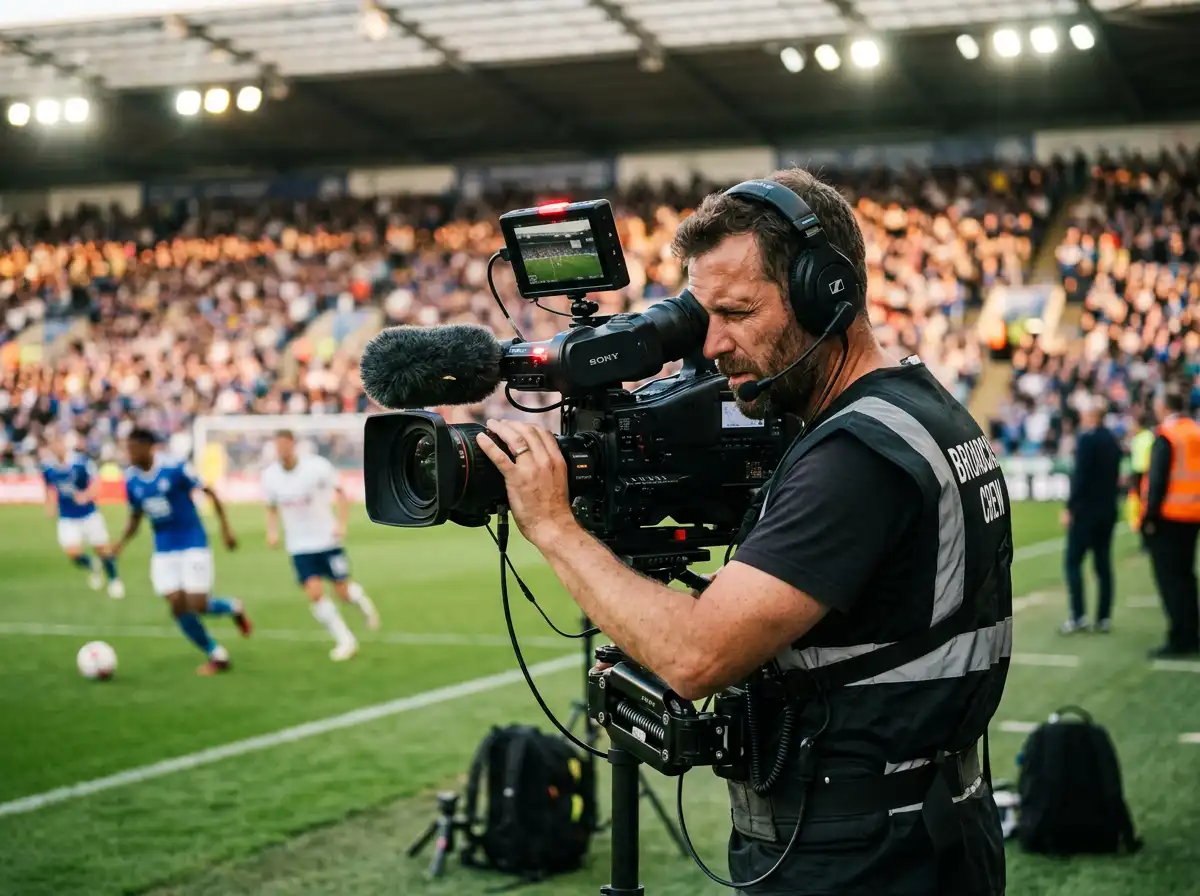
What are the signs that it’s time to hire a specialist broadcast partner?
The decision is rarely about the size of the event. It is about what is at stake.
Hire a specialist when:
- You are entering a media rights agreement for the first time
- An international federation is assigning broadcast obligations to your event
- A sponsor’s contract includes broadcast deliverables
- Your current setup has failed — or nearly failed — during a live event
- You are planning an event that will be distributed beyond your own channels
The earlier a specialist is brought in, the lower the cost of the engagement. Broadcast architecture is significantly cheaper to plan correctly from the start than to fix under pressure during production.
The bottom linesports federation broadcast production
The question is not whether to invest in professional broadcast production. For any federation with media ambitions — sponsorship, TV partnerships, international distribution — the question is when.
Waiting until the moment of failure is the most expensive option. The cost is not only financial. It is the broadcaster relationship that does not develop, the sponsorship package that cannot be justified, the international federation standard that cannot be met.
Professional broadcast production is not a luxury for large federations. It is the infrastructure that makes growth possible.
Looking for a broadcast partner for your next event? Contact us