
In today’s digital age, practically any event can be streamed live—conferences, concerts, weddings, graduation ceremonies, you name it. Yet there is one genre that stands apart in its complexity and impact: sports broadcasting. A live sports event is not just a visual experience; it’s a dynamic, fast-paced narrative with unpredictable turns. This demands a completely different production mindset and technical setup than a standard live stream or a studio-based talk show.
In this article, we’ll explore what sets sports broadcasting production apart—and why a properly equipped broadcast vehicle is often the heartbeat of this high-pressure environment.
This is what happens in an OB truck during a production (embedded from InFront Media Linked In profile):
1. The Crew Must Know the Game
Unlike other live events, a sports broadcast cannot be executed well by technicians alone. Everyone involved—from director to camera operators—must understand the game they’re covering.
The director needs to anticipate critical moments and make split-second decisions on which feed to cut to. Camera operators must track the ball or puck intuitively and predict where the action will move next. The replay operator has to instantly identify the key moment to highlight. The graphics operator must know when to pull up the scoreboard, stats, or lineups.
In sports, understanding the game isn’t a bonus—it’s the foundation of a good broadcast.
2. Professional Camera Kits—No Room for Compromise
Sports production requires far more advanced gear than a corporate webinar or studio discussion. Consumer-level DSLRs or mirrorless cameras simply won’t cut it. These devices aren’t designed for continuous movement or real-time live output.
The ideal sports camera setup delivers two critical capabilities:
- Rapid and powerful zoom: To switch instantly from a wide shot of the field to a close-up of a sprinting athlete.
- Smooth and stable panning: To follow fast action fluidly without jump cuts or jarring motion.
For example, in a soccer match, the camera may need to jump from a penalty box skirmish to a breakaway counterattack in seconds. This requires not just excellent cameras, but also highly skilled operators who understand motion and pace.
3. Real-Time Scoring and Stats—No Delays, No Errors
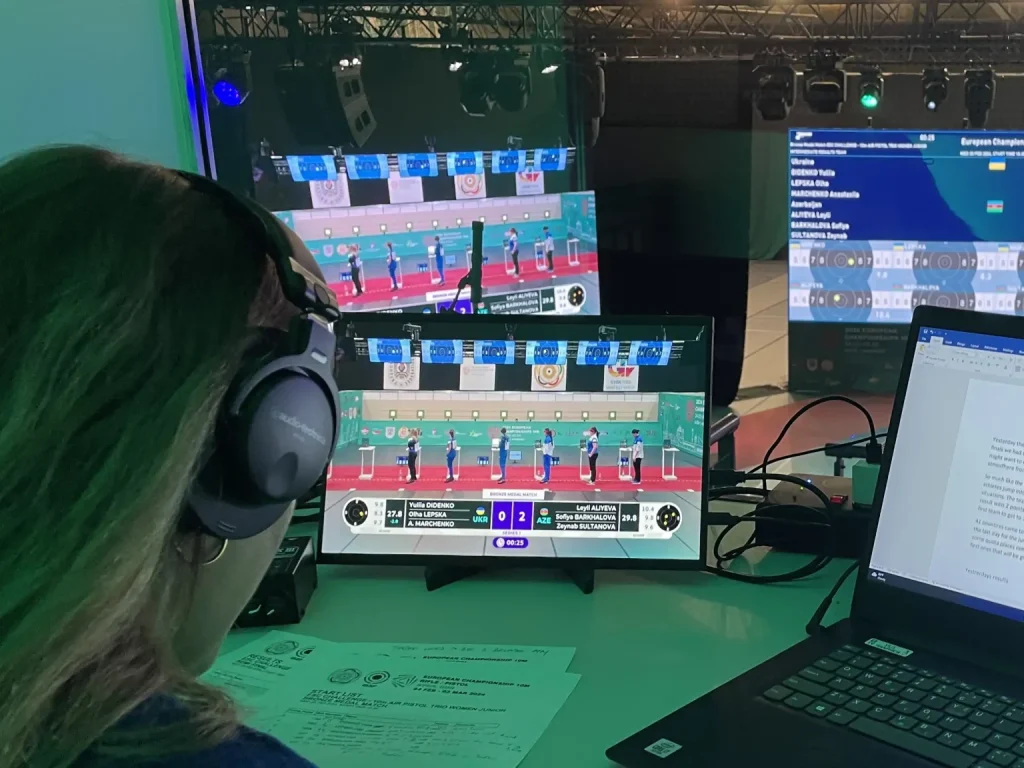
No sports broadcast is complete without an accurate, live scoreboard. That little graphic in the corner—the “scorebug”—is vital for viewer orientation. It typically displays the score, time, player names, fouls, or stats.
This system must:
- Update in real time,
- Be synced with referee input or a live scoring operator,
- And never make mistakes.
Why? Because trust is everything. A delayed or incorrect score creates confusion and undermines credibility. The stats, too, are not just filler content. They are essential for both commentators and fans, offering quick insights into team performance, individual player metrics, or match trends.
Advanced systems can present this data using professional animations, infographics, or even VR-enhanced visuals—all managed directly from the broadcast vehicle.
4. No Sports Broadcast Without Instant Replay
Slow motion replay is not a luxury—it’s a core feature of any professional sports production. Audiences expect to rewatch the pivotal pass, the potential offside, or a heavy collision immediately.
To do this, the replay system must:
- Instantly roll back the last few seconds with a single button press,
- Offer multiple angles in slow motion,
- And generate quick highlight reels for halftime or post-match coverage.
A robust replay solution boosts the performance of the director, enhances commentary, and dramatically improves the viewer experience. Sometimes, a perfectly timed replay can deliver more excitement than the live moment itself.
5. Great Commentators Bring the Broadcast to Life
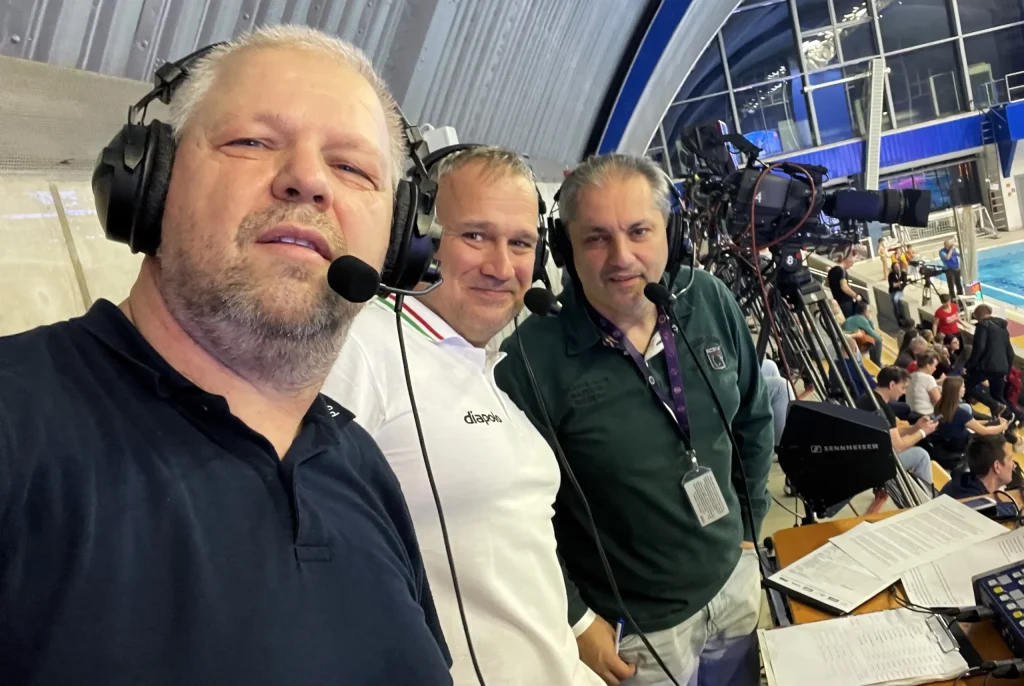
Even the most cinematic visuals can fall flat without a voice to guide the story. A skilled commentator does more than describe the action—they provide emotional depth, historical context, and a narrative arc.
Here’s what makes a great sports commentator essential:
- They explain the game to casual viewers,
- Build tension and excitement,
- And translate raw stats into compelling storylines.
Unprepared commentators kill momentum. The best ones know the teams, understand the league history, and can respond with insight when the unexpected happens—be it a last-minute goal or an injury.
6. Sports Is Still Watched Live—And That’s a Game Changer
While many types of content have shifted to on-demand consumption, sports remain one of the few genres that people insist on watching live. Fans don’t want a summary, a cut-down edit, or a highlights reel. They want it now, as it unfolds.
As Sportsmarketing.hu rightly stated:
“In 2025, nothing beats a live sports event when it comes to reaching the masses in real time.” (Source: LinkedIn)
This is what makes sports broadcasting so special. It’s not just about visuals or content—it’s about delivering real-time experiences that connect millions of people in the moment. And behind every such broadcast, there’s usually a high-performance broadcast vehicle ensuring everything runs like clockwork.
Sports Production Is Not Just Experience—It’s a Business
Beyond the thrill and technical mastery, sports broadcasts carry serious business potential. Unlike other live streams, which may rely solely on client fees or basic sponsorships, sports events open the door to multiple monetization strategies.
Here are just a few opportunities:
- Ad slot sales: During halftime or pre/post-match segments.
- Branded graphics: For example, “Scoreboard sponsored by Brand X.”
- Pay-per-view or subscription models: Especially for minor leagues and amateur tournaments.
- Selling highlight reels: Teams, players, and agents use them for marketing, scouting, and social media.
- Social media revenue: YouTube, TikTok, and Facebook monetization.
- Statistical data licensing: Clubs, coaches, and analytics companies purchase advanced data visualizations.
Because sports evoke strong emotions and loyalty, the broadcasts themselves become assets. They benefit not only fans but also clubs, sponsors, and the production company behind the scenes.
Conclusion:
The Broadcast Vehicle Is the Engine of Sports Live Production
From cameras and replays to graphics and commentary, the backbone of any professional sports production is a well-equipped broadcast vehicle. These mobile control centers house the switching gear, scoring systems, replay servers, and technical staff that make the magic happen in real time.
In a world increasingly dominated by on-demand and algorithm-driven content, sports remain one of the few live experiences that still captivate audiences worldwide. But to deliver that magic, it takes more than a streaming link—it takes expertise, timing, and the right tools on wheels.